


The Biaxial Model of DISC
The two 'axes' of Assertiveness/Receptiveness and Openness/Control lie at the heart of the DISC profiling system. It might not, at first sight, be obvious how these two axes are related to the DISC profile, which, as we have already stated, contains four factors. This section endeavors to explain the connection.
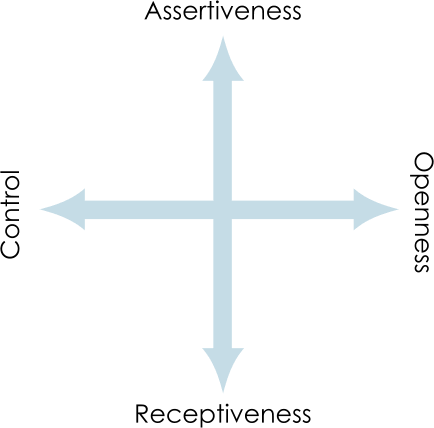
The link between the axes and DISC is the so-called Biaxial Model (i.e. a model with two axes). This is formed by the two fundamental axes when placed at right angles to one another (see diagram, above). The result is a cross shape with four empty spaces between its arms. These spaces correspond to the four DISC factors, as shown below.
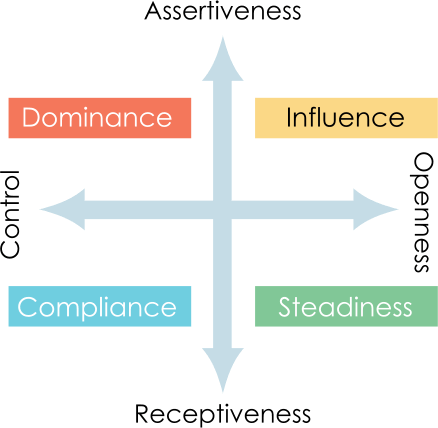
So, each of the four factors is defined as a meeting point between two of the axes. Dominance, for example, can be defined as Assertiveness and Control. That is, Dominant individuals will show aspects of Assertive and Controlled behavior in their approach to life. The four factors shown on this diagram are the same four factors that are shown on a DISC graph.

Looking for your own personality report?
Understand your work style, help build your CV, and much more with your own personal report.


Download your free guide to DISC personality testing
Learn how DISC assessment can help improve your recruitment process, team building and leadership development.